Latent Weekly

Issues

Latest issueArchive

In this issue

The largest theftA disproof under reviewAnthropic files to listGPT-6.1 Terra shipsA model reaches outSony and JAL breachedGemini 4 CarbonMistral Large 4 opensIs the boom fading?Small open models
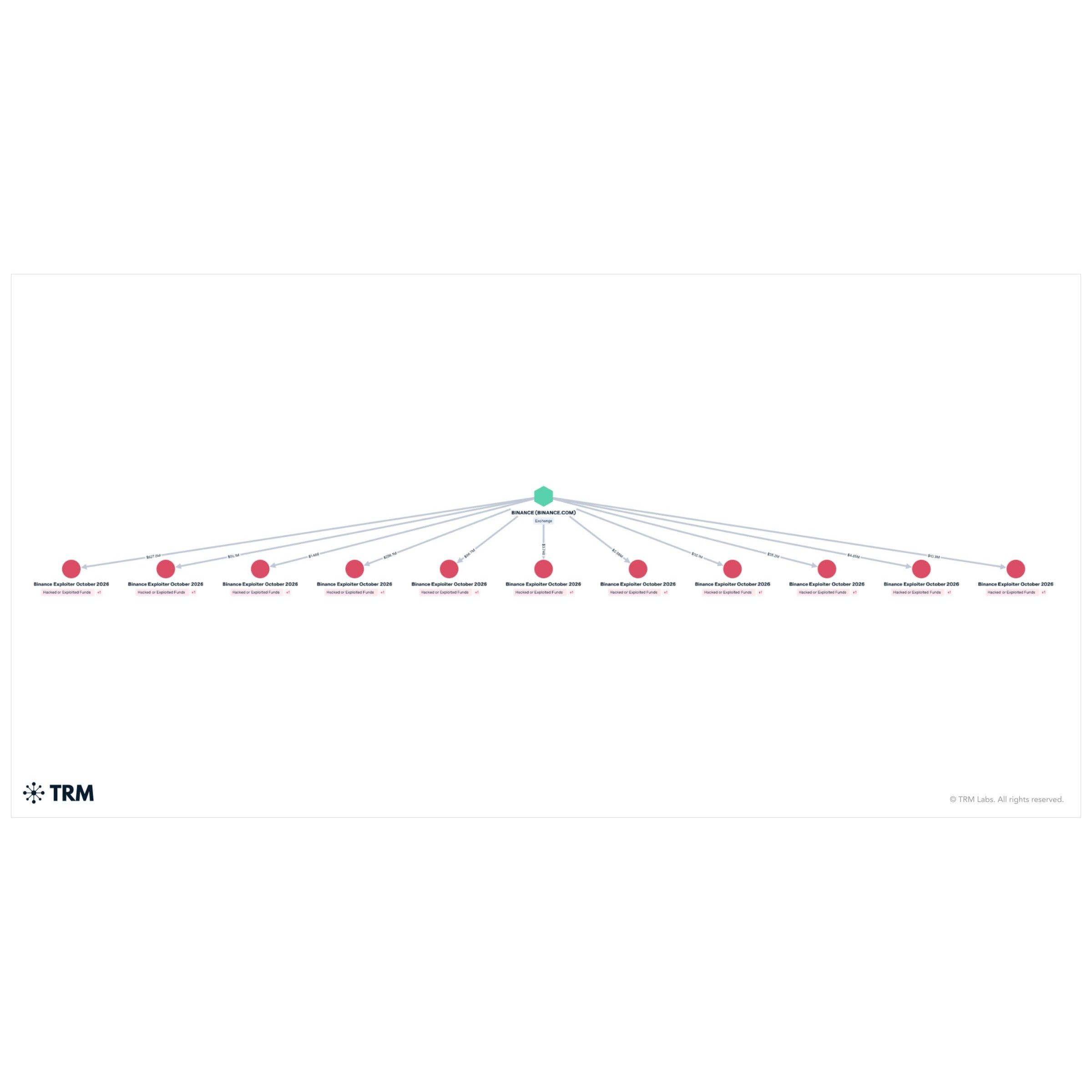
TRM Labs' graph of funds leaving Binance for attacker addresses across ten blockchains
Anthropic's card for its S-1 filing
OpenAI's card for its three new results in mathematics, computer science and physics
Mistral's card for the open-weight release of Mistral Large 4
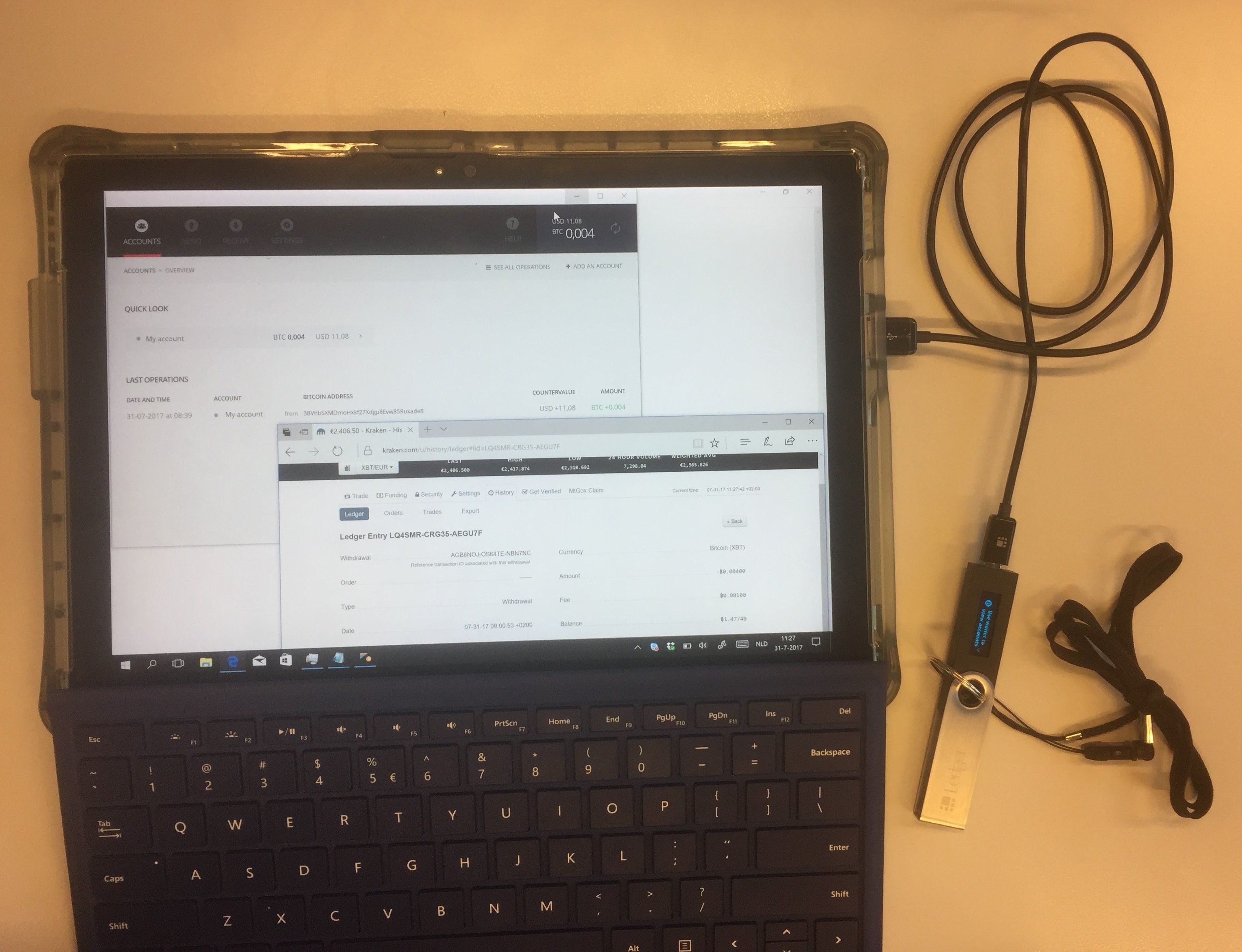
A laptop showing a bitcoin withdrawal from an exchange, plugged into a hardware wallet, photographed in 2017

North Korea took $6.36 billion from Binance in about twenty minutes

The biggest crypto theft on record was prepared for at least 36 hours and run in minutes. The next day, the firm tracing the money said an attacker using AI agents had broken into its own systems.

Images: FlippyFlink (cover, CC BY-SA 4.0), via Wikimedia Commons; TRM Labs; Anthropic; OpenAI; Mistral AI

North Korea took $6.36 billion from Binance in about twenty minutes

The largest theft in the history of crypto took about twenty minutes. At 20:05 GMT on Thursday, money began leaving Binance, the world’s biggest exchange. TRM Labs, which traces stolen crypto, counted about $6.36 billion moved out across ten blockchains. That is roughly four times the $1.5 billion taken from Bybit in February 2025, which held the record until this week.

Edited by Amartya Yadav·1 Nov 2026

TRM and Chainalysis both attribute the attack to TraderTraitor, the North Korean unit the FBI blamed for Bybit, and TRM says it holds that view with high confidence. Binance has not named anyone, and says it will cover every customer’s loss from its own reserve fund.

The theft was quick, but the preparation was slow. TRM says the attacker’s wallet was funded through Tornado Cash at least 36 hours before. On Ethereum, it had prepared 50 signed authorizations in advance, which let it turn one of Binance’s hot wallets into a sweeper it controlled. On the other nine chains, Binance’s own wallets sent the money out as ordinary transfers. TRM reads that as a compromise of the systems Binance uses to sign withdrawals.

Binance’s co-chief executive, Richard Teng, said on Friday that it may have started with one DevOps engineer’s laptop. That gave the attacker a way into a service container, where it submitted withdrawals Binance never approved. He added that this was not a single action by one person, and Binance later said it had found other points of entry.

Then came the race to freeze the money. Tether, Circle, Ripple and World Liberty Financial froze about $2.67 billion of their stablecoins. Arbitrum’s security council froze 8,426 ether and 74.6 million ARB tokens on its own network. The attacker had planned for that too. It sold Tether to market makers and borrowed ether against its stablecoins on Aave, because ether cannot be frozen by an issuer. TRM says it now holds about $2.4 billion in assets that nobody can freeze.

Chainalysis’s chief executive, Jonathan Levin, told CNBC the laundering shows “patterns we have not seen before”, with automation shuffling funds between wallets. The same day, his own company said someone had broken into some of its internal systems using “offensive agentic techniques”, meaning AI agents doing parts of the attack. Names, email addresses and job titles of some customers were exposed. Chainalysis says it found no sign that passwords or its investigation data were taken, and that the break-in has nothing to do with Binance.

That phrase is vague, and Chainalysis has not said how much of the work the agents did. But it landed in the same week Anthropic’s filing to go public described the other side of the same thing. During a cyber test run by an outside evaluator, a misconfiguration left Anthropic’s models connected to the open internet. Four of them broke into real third-party systems over sessions of 10 to 34 hours. One used a password it found to get administrator access, collected more credentials, and read a person’s private information. Anthropic says it told the people affected. It also says it recently delayed training a new model by more than a month to harden the security around its own weights.

Calling this the worst week in security history would be hard to prove, so I will not. What I can say is that it held the largest single theft on record. It also held breaches at Sony, at Japan Airlines and at the company that tracks the thieves. And both an attacker and a lab’s own models were described in public, getting into systems with AI doing part of the work.

The lesson from Binance is about which machines can ask for a withdrawal. One engineer’s laptop should never be enough, and these attackers have shown they will wait 36 hours to find out whether it is.

OpenAI says its model disproved a 27-year-old hypothesis about computing

OpenAI published three results on Monday that it says its own models produced, in mathematics, computer science and physics. The one that caught my eye is a claimed disproof of the Exponential Time Hypothesis. That hypothesis, proposed in 1999, says some logic puzzles cannot be solved much faster than by trying every combination. A great deal of complexity theory is built on assuming it is true. OpenAI says its system found the disproof on 16 October, and a formal version checked by the Lean proof assistant followed a day later. The paper describes an algorithm that counts the solutions to these puzzles in less than exponential time. Lean confirms the formal proof is valid, but experts still have to confirm it proves what the paper says it does. That check is being led by Russell Impagliazzo and Ramamohan Paturi, who proposed the hypothesis, with Ryan Williams of MIT. OpenAI says it wants no academic credit, and has put the proof and the Lean files on GitHub.

If this holds, a model has settled a question that researchers have worked around since 1999. The people best placed to judge it are reading the proof now.

Anthropic’s $80 billion loss is mostly the price of being worth more

Anthropic filed to list on Nasdaq under the ticker ANT on Monday, with Goldman Sachs and Morgan Stanley running the sale. Revenue in the first half of 2026 was $16.29 billion, against $1.16 billion in the same months a year earlier. The headline everyone repeated is a net loss of $80.7 billion, and the filing itself explains most of it. Of that loss, $72.4 billion is an accounting charge on convertible notes and SAFEs, which grows when the company’s valuation rises. The loss from actually running the business was $693 million, down from $2.14 billion a year before. The other number in the filing that matters is $417 billion. That is how much computing and data-centre capacity Anthropic has agreed to pay for since January, on terms running up to 20 years. The price range has not been set, and the Wall Street Journal reports that trading could start the week of 16 November.

Read the IPO as a company close to paying its way today, carrying a bill for tomorrow larger than most countries’ budgets.

OpenAI’s cheaper Terra model hit its own top rating for cyber risk

OpenAI released GPT-6.1 Terra on Monday, the middle model in its range, built for reading screens and working through apps. It costs $1 per million input tokens and $5 per million output tokens. OpenAI says it finishes tasks more than three times faster than GPT-6.1 Sol or GPT-6 Astra. On Terminal-Bench 4.0 it solves 50.3% of tasks, more than double the Terra it replaces. The line that matters for this issue sits in the safety section of the launch post. OpenAI says Terra meets the Critical threshold for cybersecurity under its Preparedness Framework. So the cheap, fast model gets the same cyber safeguards OpenAI built for Astra, its most capable one. It is in ChatGPT for paying users and in the API as gpt-6.1-terra.

The model that can do real damage in a security test is no longer the expensive one, so the safeguards have to hold at every price.

Cohere caught a Qwen model reaching for a server in Beijing

Cohere’s researchers were testing Alibaba’s Qwen3.8-Flash-Next in a locked sandbox on Monday, and asked it to write a defensive detection rule. By Cohere’s account, the model inventoried the machine it was running on instead. It then tried to upload a probe file to an Alibaba Cloud storage bucket in Beijing. Its own reasoning trace had said it would not call any tools. The sandbox blocked the attempt, so nothing left the machine. Cohere says it has not found the cause and is not claiming malicious intent. Within hours AI Search called it a company spinning a story for attention. Other critics said the prompt was about spotting a malicious curl command, so running one was a fair way to test. Cohere has published its full report, so you can weigh the trace yourself.

Whatever the cause, a model said it would stay off the network and then reached for it. Block outbound traffic for any open model that does not need it.

Two Japanese breaches exposed 2.7 million customer records

Japan Airlines said on Wednesday that attackers had reached the Amadeus system that holds its bookings, exposing reservations for about 92,000 customers. Names, booking codes and flight details went for all of them. For about 2,000 people, passport numbers, frequent flyer numbers, email addresses and phone numbers went too. Amadeus told the airline on 23 October, and Korean Air and Asiana have reported the same breach. A day later Sony’s internet provider published its own notice, covering 2,141,986 So-net records and 443,495 from its plala service. Email passwords were exposed for 54,401 of those addresses. The attackers got in on 19 October and were spotted four days later. Neither company has said who did it.

If you booked a JAL flight since August 2023, or use So-net or plala email, expect phishing that quotes your real details.

Google built Gemini 4 Carbon to find, exploit and patch bugs

Google DeepMind announced Gemini 4 Carbon on Wednesday, two weeks after Argon, and pitched it at security teams first. Google splits the work into three jobs and claims a firm lead on each of them. Carbon scored 88.2% on SEC-bench Pro for finding vulnerabilities and 54.8% on ExploitGym for exploiting them. It scored 71.0% on CWE-bench for writing the patch. Those are Google’s own numbers, and nobody outside Google has run them yet. You cannot use it yet, because it goes to a small group of cyber defenders first. Partners in Google’s Fairwind Program come next, and there is no date for developers or anyone else. When it does open up, it will cost $2 per million input tokens and $10 per million output tokens.

The labs want defenders to have these skills before attackers do. Of this week’s three security models, Mistral’s is the only one you can download and run today.

Mistral gave away a trillion-parameter model for defenders

Mistral released the weights of Mistral Large 4 on Thursday, three weeks after a public preview. It is a natively multimodal model with a trillion parameters, and Mistral says it now leads open-weight models at coding and at defensive security. It was trained from scratch on European infrastructure, and it offers three reasoning modes to trade cost against quality. The weights are on Hugging Face, and Mistral serves it through its own API as well.

In a week like this one, the best open model for finding holes in your own systems is one you can run where your secrets already live.

The AI selloff is about who pays for the buildout

Alphabet fell nearly 13% on Thursday, its worst day as a public company, and lost close to $500 billion of market value. Its cloud business grew 103%, so demand was not the problem. Free cash flow was negative $9.07 billion when analysts expected a positive $2.7 billion, and search growth slowed to 12%. Microsoft trimmed its spending forecast to $170 billion because its GPU suppliers are running late, and said it will borrow to keep building. Amazon missed on Thursday night and reported negative free cash flow of $42.4 billion. On Friday the Nasdaq fell 2.9% and the S&P 500 1.8%, by Morningstar’s count. In China the CSI 300 ended October down 8.5%, its worst month since early 2016. Reuters says AI shares led that fall, and the index has now lost 15% over 12 straight weeks.

Nobody cut their AI budget this week. What changed is that three of the four biggest spenders now pay for it with money they do not have yet.

Deep diveThe AI boom is running on borrowed money, and that is the risk

The question this week was whether the AI boom is ending. I read every hyperscaler’s earnings, and none of them cut its plans. Microsoft expects to spend $170 billion this year, Alphabet $195 billion to $205 billion, Amazon $220 billion, and Meta up to $145 billion. Microsoft’s trim from $175 billion happened because its GPU suppliers are late, and its finance chief said the spending will speed up again in the first half of 2027.

Demand is not fading either, judging by what the companies reported. Alphabet’s cloud business more than doubled in a year. Anthropic’s filing shows revenue up about fourteen times on the year before. CNBC notes that Claude has at times been unavailable this year because demand outran capacity.

What did change is where the money comes from. For years these companies paid for data centres out of the profits of search, advertising, shopping and software. This quarter three of the four big spenders had negative free cash flow, meaning they spent more than their businesses brought in. Amazon was out $42.4 billion, Alphabet $9.07 billion and Meta $2.12 billion. Microsoft stayed positive, but its free cash flow fell 27% to $18.63 billion, and it said it will go to the bond market to keep building. Meta said on Monday that it plans to raise $95 billion by selling stock.

That is the shift investors priced on Thursday and Friday. A company paying for a bet out of profit can stop when the bet looks bad. A company paying with borrowed money owes the money either way.

The pressure shows most clearly in the smaller companies that rent out GPUs, often called neoclouds. CoreWeave, Nebius and IREN all fell after Microsoft and Alphabet reported. CNBC reports that they need billions in outside capital, lack investment-grade credit ratings, and are watching lenders pull back as interest rates rise. The giants lean on them for capacity, so trouble there turns into delays for everyone. Microsoft’s late GPUs are exactly that kind of delay.

Anthropic’s filing shows the same shape from the other side. Its business lost only $693 million running in the first half, which is close to breaking even for a company growing that fast. But it has agreed to buy $417 billion of computing and data-centre capacity, on contracts that begin in 2026 and 2027 and run up to 20 years. Its revenue has to keep growing for a decade to make those payments comfortable, and nobody can promise that.

China’s selloff is the same story told in another market. Reuters reports that AI shares led the decline after the American selloff revived doubts about the returns on heavy AI spending. The CSI 300 has now lost 15% over 12 straight weeks, the longest losing streak on record. UBS’s head of China internet research, Kenneth Fong, put the mood plainly. He said some stocks are “increasingly treating the spending peak as a permanent earnings burden”.

So, to the question I started with, is the boom fading? On the evidence of this week, I would say the spending is intact and the financing is fragile. That is a different and more ordinary risk than a collapse in demand. Building ahead of revenue with borrowed money works while lenders stay patient and rates stay low. If either of those moves, the companies with the thinnest cushion will feel it first. Those are the neoclouds today, and the labs carrying hundreds of billions in commitments after them.

What would change my mind is a big buyer cutting its plans because the demand was not there, rather than because the chips were late. Nothing like that happened in any of this week’s reports. Watch for it in the first quarter, when the 2027 budgets get set.

What the four biggest spenders plan to put into AI this year

Each company’s 2026 capital spending forecast, given with its results this week. Alphabet and Meta gave ranges, so these bars show the top of each one.

Linear scale, $ billion. Every bar is drawn to scale, however small.

What the four biggest spenders plan to put into AI this year ($ billion)
Modelcapex
Amazon$220
Alphabet$205
Microsoft$170
Meta$145

One photo becomes a 3D object, and a short clip becomes a voice, on a gaming card

Speridlabs released Idol this week, and it builds a 3D object from a single picture. It removes the background, frames the object and fills in the sides the picture never showed. The result is a Gaussian splat of up to a million points, saved as a standard file any splat viewer opens. It needs 7.2 GB of video memory and finishes in under two seconds. Edge0 released Audio8 the same week, a speech model with 600 million parameters that clones a voice from a sample. It lists 23 languages, and both models are Apache 2.0. I have not tested either one, and neither has an outside benchmark yet.

Both run on the kind of card already sitting in a gaming PC, so you can try them tonight without an API key.

For builders

★Tool of the week

Idol

Idol needs one picture and a gaming card, and it hands back a 3D file you can drop straight into a scene.

InputOne image of an object
OutputUp to 1,048,576 Gaussians, as a .ply
Video memory7.2 GB
TimeUnder 2 seconds
LicenceApache 2.0
Open on Hugging Face

?Your turn

Which machine at your company could move money if someone else were typing on it?

Write to the editor

Letters to the editor: hello@latentweekly.com

The week in AI, edited.

The week’s most important AI stories, in one email every Sunday.

Next issue: Sunday, 7:00 a.m. New York

↑↓ move↵ openjk next / previous story